Concrete Driveways
Upgrade your home with a professionally installed concrete driveway that handles daily traffic, looks great, and lasts for decades without the constant repairs asphalt requires.
Why Concrete Beats Asphalt for Driveways
Your driveway takes more punishment than any other surface on your property. Cars weigh thousands of pounds, and you drive over the same spots every single day. Most driveways also deal with oil drips, tire marks, freeze-thaw cycles, and blazing summer heat. Concrete handles all of this better than asphalt, which is why more homeowners choose concrete when they want a driveway that actually lasts.
Asphalt needs resealing every few years and still starts cracking and crumbling within a decade. Concrete driveways regularly last 30 years or more with nothing but occasional cleaning. The initial cost is higher, but when you factor in maintenance and replacement costs, concrete saves money over time. Any experienced concrete contractor will tell you the same. Plus, a concrete driveway adds more to your home value than asphalt does.
Here in Midland, concrete makes even more sense. Our temperature swings stress asphalt until it breaks down. Hot summer days soften asphalt, letting it deform under vehicle weight. Cold winters make it brittle and prone to cracking. Concrete stays stable through these temperature changes, maintaining its strength and appearance year after year. Midland Concrete Company installs driveways that handle our local climate without the constant maintenance headaches asphalt creates.
What Makes a Quality Concrete Driveway
A driveway is more than just concrete on top of the ground. What happens below the surface determines how long your driveway lasts. We start by excavating to proper depth and removing unsuitable soil. The base layer goes in next, typically six inches of compacted gravel that provides drainage and stable support. This base work takes time and costs money, but skipping it guarantees problems within a few years.
Driveway concrete needs to be thick enough to handle vehicle loads. We pour residential driveways at least four inches thick, and often go to six inches for areas where trucks or RVs will park. The concrete mix includes proper reinforcement, either rebar or wire mesh, to control cracking. We also add fiber reinforcement to many driveway pours for extra crack resistance.
Essential Driveway Features
- Minimum four-inch thickness, six inches for heavy vehicle areas
- Steel reinforcement throughout the entire slab
- Proper slope for water drainage away from garage and street
- Control joints every 10 feet to manage natural concrete movement
- Smooth trowel finish or broom texture for traction
- Sealed edges where driveway meets existing concrete or asphalt
Drainage matters more than most people realize. Water that pools on your driveway or flows toward your foundation causes problems. We grade driveways to direct water where it should go, usually toward the street or into yard areas away from structures. Small drainage issues become big problems during heavy rains or snowmelt, so we handle this correctly from the start.
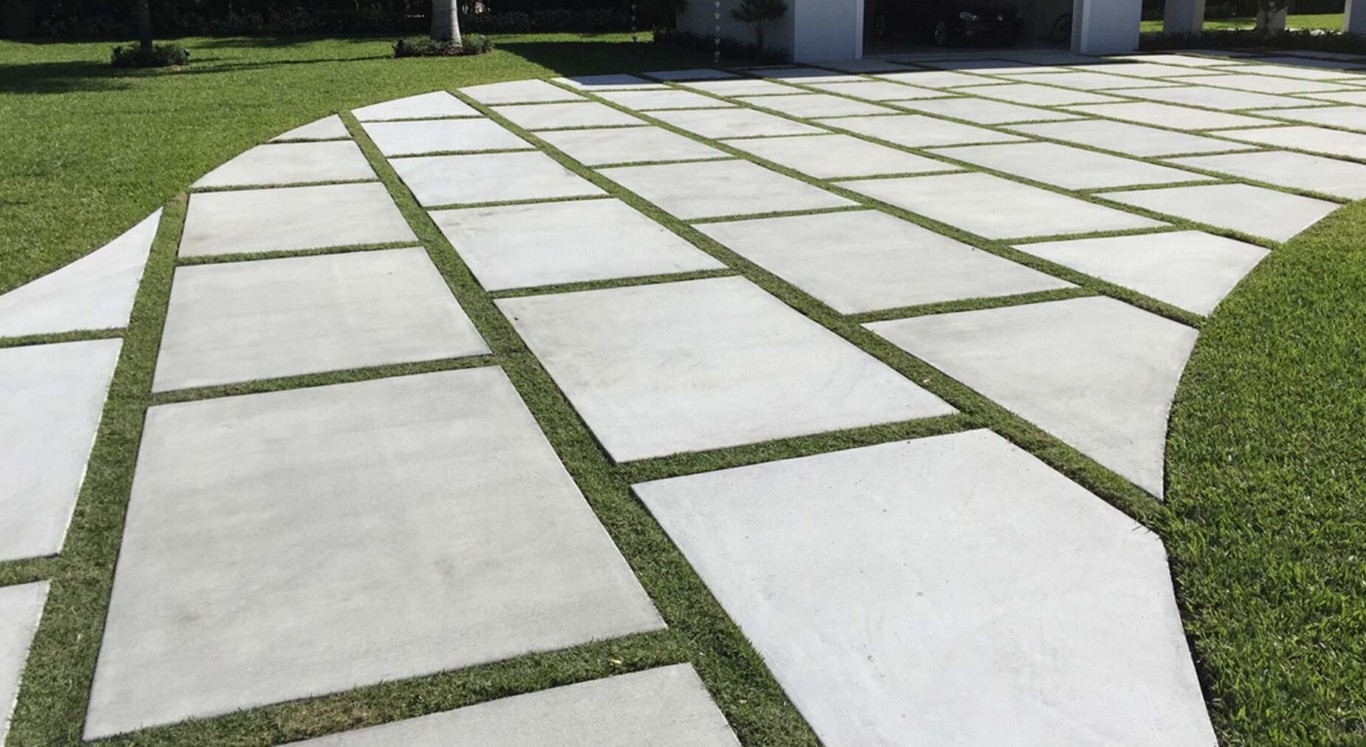
Finishing affects both appearance and function. A smooth trowel finish looks clean and modern but can be slippery when wet. Most driveways get a light broom finish that adds texture for traction without making snow removal difficult. If you want something more decorative, we also offer stamped concrete driveways that look like pavers or stone but perform like solid concrete.
The Driveway Installation Process
Driveway projects start with layout and measurement. We mark the driveway area and verify dimensions with you before we excavate anything. Once you approve the layout, excavation begins. We remove existing material if needed and dig down to proper depth. The excavated area needs to be level and properly graded before base material goes in.
Base preparation takes most of the first day on a typical driveway job. Gravel goes in, gets spread evenly, and then we compact it with heavy equipment. We check compaction carefully because loose base material leads to settling and cracking. Once the base passes inspection, we set forms along the edges to define the driveway shape and contain the concrete during the pour.
Pour day is when things get busy. Concrete trucks arrive and we work quickly to place, spread, and finish the concrete before it starts setting. Reinforcement goes in as we pour, positioned properly within the slab thickness. We screed the surface level, then float and trowel it smooth. Edges get rounded and control joints cut or formed while the concrete is still workable.
Curing takes several days. We keep the fresh concrete moist and protect it from temperature extremes while it gains strength. You can usually walk on the driveway after three or four days, but we ask you to keep vehicles off for at least seven days. Heavy trucks and equipment should wait a full month. Rushing the curing process weakens the concrete and shortens the life of your driveway, so patience pays off here, something any careful concrete driveway contractor will tell you.
Driveway Design and Layout Options
Driveway width depends on how many vehicles you need to accommodate. A single-car driveway works fine at 10 to 12 feet wide, but 14 to 16 feet is more comfortable if you have larger vehicles. Two-car driveways usually run 20 to 24 feet wide. If you want room to park side by side in the driveway, plan on at least 18 feet of width.
Length comes from your lot layout, but consider adding a parking pad or turnaround area if you have space. A wider area near the garage gives you room to maneuver and makes backing out easier. Some homeowners add a separate pad off to the side for boat or RV parking. We can design these elements to look intentional rather than like afterthoughts tacked on later.
Borders and accents dress up a standard driveway without major expense. A different color or texture around the edges creates visual interest. Exposed aggregate strips make nice borders and add traction near slopes. We can also integrate patio areas or walkways into the driveway design, using the same pour to save money while creating a cohesive look for your property.
Slope and elevation changes require careful planning. Steep driveways need extra attention to drainage and may benefit from a textured finish for traction. If your driveway rises or drops significantly from street to garage, we need to check clearance for your vehicles. Low-clearance cars can scrape on steep transitions, so we design appropriate grade changes that work with your vehicles.
Maintaining Your Concrete Driveway
Concrete driveways need very little maintenance compared to other paving options. Regular sweeping keeps dirt and debris from building up. Occasional washing with a hose or pressure washer removes stains and keeps the surface looking fresh. Oil spots come up with degreaser and some scrubbing. Most stains are just surface discoloration that does not affect the concrete itself.
Sealing your driveway every few years helps protect against moisture penetration and makes cleaning easier. Sealers also enhance the color slightly and add a subtle sheen that looks good. This is optional, not required, but many homeowners like the added protection and improved appearance. We can seal your driveway after installation or you can handle it yourself with products from any home improvement store.
Winter maintenance is straightforward. Shovel or blow snow as you normally would. Sand provides traction if needed without damaging the concrete. Avoid deicing salts if possible, as they can cause surface scaling over time. If you must use salt, apply it sparingly and rinse the driveway when temperatures rise above freezing. Most winters here do not require heavy salt use anyway.
Watch for settling or cracks that need attention. Small cracks are normal and usually not a concern, but large cracks or areas that settle noticeably should be evaluated. Catching problems early makes repairs easier and less expensive. If you ever have concerns about your driveway condition, give us a call. We are happy to take a look and let you know if anything needs attention.
Common Questions About Concrete Driveways
How much does a concrete driveway cost?+
Driveway costs vary based on size, thickness, site conditions, and finishing options. A standard residential driveway typically costs more per square foot than a simple concrete slab because of the base preparation and reinforcement required. Factors that increase cost include poor soil conditions that need extra base work, difficult site access, removal of existing pavement, and decorative finishes. We provide detailed estimates after seeing your property and understanding exactly what you want. Most homeowners find that the long-term value of concrete makes it worth the initial investment compared to cheaper alternatives that need frequent repairs or replacement.
Can you match my existing concrete?+
Matching existing concrete is possible but not always perfect. New concrete is lighter in color than old concrete that has aged and weathered. Over time, the new section will blend better as it weathers. We can adjust finishing techniques to get closer to the existing texture, and color additives can help with shade matching. For additions to existing driveways, we often recommend a deliberate border or design element that makes the new section look intentional rather than trying for a seamless match that might not be achievable. This approach often looks better and avoids disappointment when the color does not match exactly.
Should I replace or repair my old driveway?+
This depends on the condition of the existing driveway. Small cracks and surface damage can often be repaired cost-effectively. However, if the driveway has settled significantly, has major structural cracks, or is breaking up in multiple areas, replacement usually makes more sense. Repairs to heavily damaged driveways are often temporary fixes that do not last. We evaluate existing driveways honestly and tell you whether repair or replacement gives you better long-term value. Sometimes a partial replacement of the worst sections makes sense while keeping sections that are still in good shape. We explain all your options so you can make an informed decision based on your budget and goals.